For adults with recent NCIS or high-risk TIA in combination with antiplatelet therapy
OCEANIC-STROKE
Study Design
Learn more about the Study Design and efficacy and safety endpoints.1
OCEANIC-STROKE
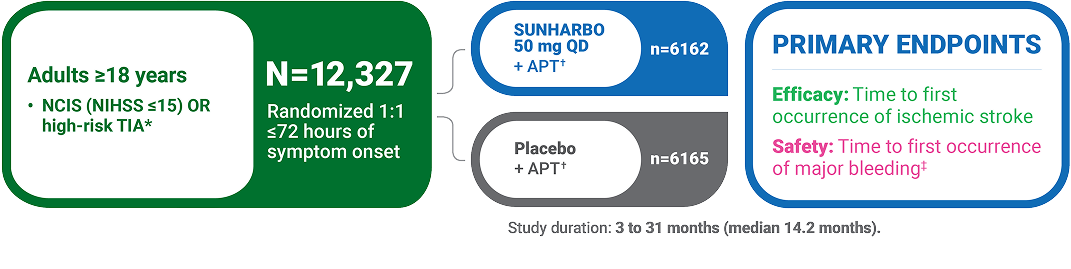
A trial of 12,327 adult patients
after a recent index event of acute non-cardioembolic ischemic stroke (NCIS) or high-risk transient ischemic attack (TIA).1
A multicenter, randomized, placebo-controlled, double-blind, and event-driven phase 3 study designed to demonstrate the efficacy and safety of SUNHARBO® + antiplatelet therapy (APT) vs APT alone.1
Inclusion criteria and design1,2
Inclusion criteria
In addition to the index event, patients needed to have at least one of the following criteria:
- Acute non-lacunar infarct on brain imaging
- For patients without positive imaging of brain infarct, at least one of the signs and symptoms relative to acute ischemic stroke/TIA event should be present: motor deficit, speech deficits, visual deficits and/or neglect.
- Evidence of cerebrovascular atherosclerosis on imaging
- History of coronary, carotid, aortic, or peripheral atherosclerotic cardiovascular disease
Exclusion criteria
Patients should have had brain imaging ruling out hemorrhagic stroke or another etiology for symptoms such as brain tumor, abscess, etc. Other exclusion criteria included:
- Ischemic stroke within 7 days of index event
- Index event related to procedures or other causes (eg, bacterial endocarditis)
- Sustained, uncontrolled hypertension
- Active non-trivial bleeding
- Major surgery during the last 30 days prior to randomization
- Modified Rankin score ≥4 prior to the index event
- History of atrial fibrillation/flutter, left ventricular thrombus, mechanical valve, or other cardioembolic source of stroke requiring anticoagulation
- Prophylactic doses of anticoagulation were permitted
- Clinically significant gastrointestinal bleeding within past 6 months
- Significant liver disease or significant hepatic impairment (Child Pugh B or C)
*ABCD2 score ≥6.
†Stratification was planned APT therapy with acetylsalicylic acid and a P2Y12 inhibitor or planned APT with the first dose given within 4 hours of randomization.
‡This outcome included fatal bleeding, and/or symptomatic bleeding in a critical area or organ, and/or clinically overt bleeding that resulted in a decrease in hemoglobin level of at least 2 g/dL or that led to the transfusion of at least 2 units of packed red cells or whole blood.
Primary efficacy endpoint1
- Time to first occurrence of ischemic stroke
Secondary efficacy endpoints1
Time to first occurrence of:
- All strokes (both ischemic and hemorrhagic)
- Composite of CV death, MI, or stroke
- Composite ACM, MI, or stroke
Efficacy outcomes were tested in a prespecified hierarchical order to control for type I error. Each endpoint was only formally tested if the preceding endpoint was statistically significant.2
Primary safety endpoint1
- Time to first occurrence of major bleeding
Other safety endpoints1
Time to first occurrence of:
- Composite of major or clinically relevant non-major bleeding
- Clinically relevant non-major bleeding
- Symptomatic ICH
- Hemorrhag ic stroke
- Fatal bleeding
- Minor bleeding
- GI bleeding
Baseline patient characteristics1,2
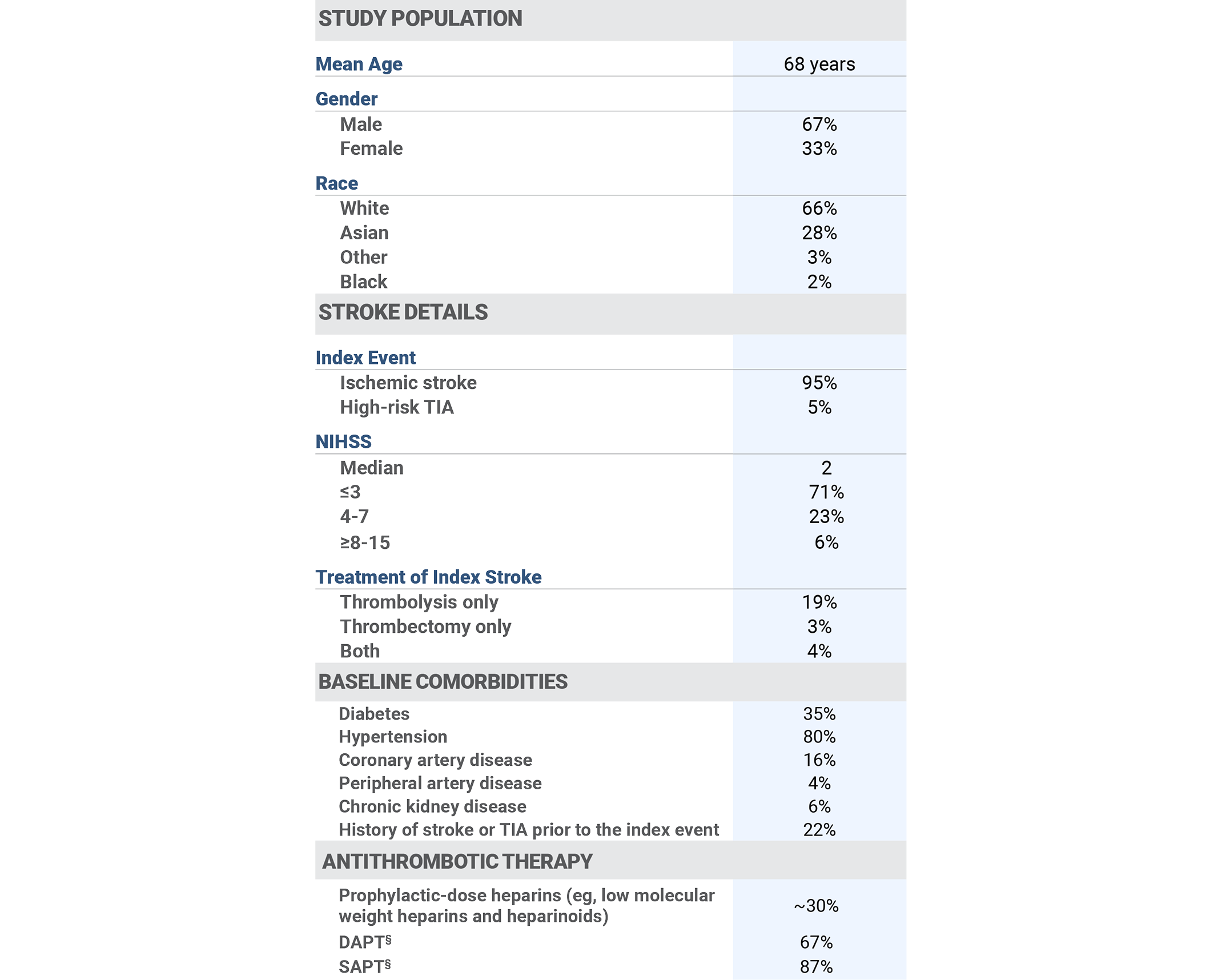
§As patients may have switched antiplatelet therapy during the study, they may be included in more than one category.
ABCD²=Age, Blood Pressure, Clinical Features, Duration, and Diabetes; ACM=all-cause-mortality; CV=cardiovascular; DAPT=dual antiplatelet therapy; GI=gastrointestinal; ICH=intracerebral hemorrhage; ISTH=International Society on Thrombosis and Haemostasis; MI=myocardial infarction; mRS=Modified Rankin Scale; NIHSS=National Institutes of Health Stroke Scale; P2Y12=purinergic receptor Y12; QD=once daily; SAPT=single antiplatelet therapy; SD=standard deviation.
References
- SUNHARBO (asundexian) [prescribing information]. Whippany, NJ: Bayer HealthCare Pharmaceuticals, Inc.; November 2026.
- Sharma M, Dong Q, Hirano T, et al; OCEANIC-STROKE Investigators. Asundexian for secondary stroke prevention. N Engl J Med. 2026;394(15):1467-1479. doi:10.1056/NEJMoa2513880